

Education
Education
Build the Knowledge That Powers Real Financial Growth
Explore our educational resources — designed to give you a clear, honest, and practical understanding of the investment world, the strategies that work, and the principles that protect your wealth over time.
Investment Types Pros, Cons & What You Need to Know
Real Estate
Real estate is one of the most well-known and historically reliable vehicles for long-term wealth creation. Property can generate both rental income and capital growth, and it is a tangible asset that many investors feel comfortable holding. However, real estate requires significant upfront capital — in the form of a deposit, stamp duty, legal fees, and ongoing maintenance — making it one of the more capital-intensive investment types. It is also relatively illiquid, meaning it cannot be quickly converted to cash in the way that shares or currencies can. Investors should understand the impact of interest rates on property values, the role of location and economic fundamentals in driving growth, and the importance of not overleveraging a position.
Pros: Tangible asset, potential for rental income, historically strong long-term capital growth, leverage available through mortgages.
Cons: High entry cost, illiquid, ongoing expenses, sensitive to interest rate movements and local economic conditions.


ETFs and Shares
Exchange-Traded Funds (ETFs) and individual shares offer investors exposure to the equity markets at a fraction of the cost of real estate. ETFs are investment funds that trade on a stock exchange and typically track an index, sector, or commodity — providing instant diversification across dozens or even hundreds of companies within a single investment. Individual shares offer the potential for higher returns but carry greater concentration risk. Both are highly liquid, meaning they can be bought and sold quickly and easily, and they can be entered with relatively small amounts of capital — making them accessible to investors at all stages of life.
Pros: Low entry cost, high liquidity, diversification (particularly with ETFs), transparent pricing, and easily accessible.
Cons: Subject to market volatility, share prices can fluctuate significantly in the short term, and individual shares carry company-specific risk.
Superannuation
Superannuation is Australia’s compulsory retirement savings system — a long-term, tax-advantaged investment structure that every working Australian contributes to throughout their career. While it cannot typically be accessed until preservation age, superannuation is one of the most powerful wealth-building tools available, largely because of the compounding effect of consistent contributions over decades and the significant tax concessions that apply to both contributions and earnings. Understanding how your super is invested, how to choose the right fund and investment option, and how to make voluntary contributions to accelerate your balance is essential financial knowledge for every Australian.
Pros: Tax advantages, compulsory employer contributions, long-term compounding effect, wide range of investment options available within super.
Cons: Funds are locked away until preservation age, limited control compared to direct investing, and returns depend on investment options chosen.


Forex (Foreign Exchange)
The foreign exchange market—commonly known as forex—is the largest and most liquid financial market in the world, with trillions of dollars exchanged daily. Forex involves buying one currency and simultaneously selling another, with the aim of profiting from changes in exchange rates. It operates 24 hours a day, five days a week, and is heavily influenced by geopolitical events, interest rate decisions, inflation data, and global economic sentiment. Forex can be entered with relatively modest capital, but it carries significant risk due to the high leverage typically involved and the speed at which currency values can move.
Pros: high liquidity, accessible with modest capital, operates around the clock, wide range of currency pairs to trade.
Cons: High volatility and risk; leverage amplifies both gains and losses; heavily influenced by unpredictable geopolitical and macroeconomic events.
Digital Currencies
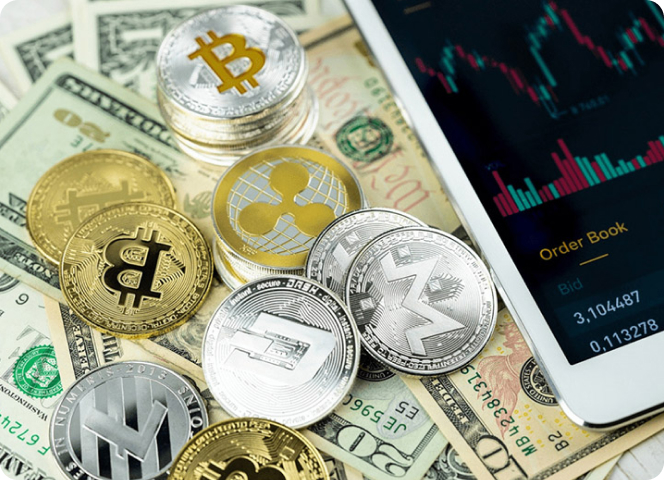
Digital currencies—commonly referred to as cryptocurrencies—are decentralized digital assets that operate on blockchain technology. Bitcoin, Ethereum, and thousands of other digital currencies have attracted significant attention as speculative investment vehicles and, increasingly, as potential stores of value or mediums of exchange. Digital currencies can be accessed with very small amounts of capital and are traded around the clock on global exchanges. However, they are among the most volatile asset classes in existence, with prices capable of moving dramatically within hours in response to news, regulation, or market sentiment.
Pros: Accessible with small capital, highly liquid, potential for significant gains, operates 24/7.
Cons: Extreme volatility, largely unregulated in many jurisdictions, susceptible to sentiment-driven price swings, complex tax implications.

Metals (Gold, Silver & Precious Metals)
Precious metals — particularly gold and silver — have been used as stores of value for thousands of years and continue to play an important role in diversified portfolios today. Gold in particular is widely regarded as a safe-haven asset, meaning it tends to hold or increase in value during periods of economic uncertainty, inflation, or geopolitical instability. Metals can be accessed through direct physical ownership, ETFs that track metal prices, or futures contracts. Entry costs are modest compared to real estate, and metals provide a meaningful hedge against currency devaluation and inflationary pressures.
Pros: Inflation hedge, safe haven in times of uncertainty, accessible through multiple vehicles including ETFs, no counterparty risk with physical ownership.
Cons: Does not generate income (no dividends or rent); price can be volatile in the short term; storage costs apply to physical holdings.
Commodities
Commodities include a broad range of physical goods—from agricultural products such as wheat and corn to energy resources such as oil and natural gas and industrial metals such as copper and aluminum. Commodity prices are driven by global supply and demand dynamics and are heavily influenced by geopolitical events, weather patterns, and macroeconomic trends. Investors can access commodities through ETFs, futures contracts, or commodity-focused shares, making them accessible without the need for large upfront capital. Commodities can serve as a useful diversifier within a broader portfolio, particularly as a hedge against inflation.
Pros: Diversification benefit, inflation hedge, accessible through ETFs and shares, exposure to global economic activity.
Cons: Prices can be highly volatile, influenced by factors outside investor control (weather, geopolitics); futures trading is complex and high-risk.

Key Investment Concepts Every Investor Should Understand
Short-Term vs Long-Term Investing
Short-term investing involves buying assets with the intention of selling them relatively quickly — typically within weeks, months, or a few years — to capitalise on near-term price movements. It requires active monitoring, a higher risk tolerance, and a sound understanding of market dynamics. Long-term investing, by contrast, is the practice of buying and holding assets over many years or decades, allowing the power of compounding and market growth to work in your favour. Historically, long-term investors who remain patient through periods of volatility have been significantly rewarded. For most everyday investors, a long-term approach — paired with consistent contributions and sound diversification — is the most reliable path to building meaningful wealth.


Dollar-Cost Averaging — Why It Matters
Dollar-cost averaging is the practice of investing a fixed amount of money at regular intervals — weekly, fortnightly, or monthly — regardless of what the market is doing at any given time. Rather than trying to time the market perfectly, which even professional investors consistently fail to do, dollar-cost averaging removes emotion from the equation and ensures you are consistently building your position over time. When prices are low, your fixed investment buys more units. When prices are high, it buys less. Over time, this averages out your cost per unit and significantly reduces the risk of investing a large lump sum at an inopportune moment. It is one of the simplest, most effective, and most underutilized strategies available to everyday investors.
Don't Put All Your Eggs in One Basket
This well-known principle carries profound financial wisdom. Concentrating all of your wealth in a single asset, company, sector, or geography exposes you to the risk that if that one thing performs poorly—due to market conditions, geopolitical events, regulatory changes, or company-specific issues—your entire financial position suffers. Diversification is the strategy of spreading investments across different asset classes (shares, property, metals, and currencies), sectors (technology, healthcare, and energy), and geographies (Australia, USA, Asia, and Europe) so that no single event can devastate your portfolio. A well-diversified portfolio does not eliminate risk, but it manages it intelligently, ensuring that the performance of your overall position is not dependent on any single outcome.


Understanding Volatility
Volatility refers to the degree to which the price of an asset fluctuates over time. A highly volatile asset — such as a cryptocurrency or small-cap share — can swing dramatically in value within a very short period. Lower-volatility assets — such as government bonds or blue-chip shares — tend to move more gradually. Volatility is not inherently bad. For long-term investors who understand it, volatility creates opportunity — the chance to acquire quality assets at temporarily reduced prices. For short-term or emotionally reactive investors, however, volatility can lead to panic selling at the worst possible moment. Understanding volatility, and having a clear strategy for how you will respond to it, is one of the hallmarks of a financially educated investor.
How Geopolitics Impacts Markets
Geopolitical events — including elections, international conflicts, trade disputes, sanctions, and shifts in government policy — have direct and often immediate impacts on global financial markets. A major conflict in a commodity-producing region can cause oil prices to spike. A trade dispute between major economies can rattle share markets worldwide. A central bank raising interest rates to combat inflation can cause bond prices to fall and currency values to shift. Understanding the relationship between world events and financial markets does not require you to predict the future — it requires you to understand the mechanisms well enough to make calm, informed decisions when headlines create short-term market noise. Financially educated investors do not panic. They understand context, stick to their strategy, and act with purpose.


Important Note — Never Take Loans to Invest
One of the most important principles in sound financial education is this: never borrow money to invest in volatile assets. Taking out a personal loan, credit card advance, or any form of debt to fund speculative investments dramatically amplifies your risk. If the investment performs poorly, you are left not only with a loss but also with a debt that must still be repaid—often with interest. Building wealth through investing is a long-term endeavor that should be funded from surplus income, savings, and financial discipline—not from borrowed capital that places your financial security at risk.